
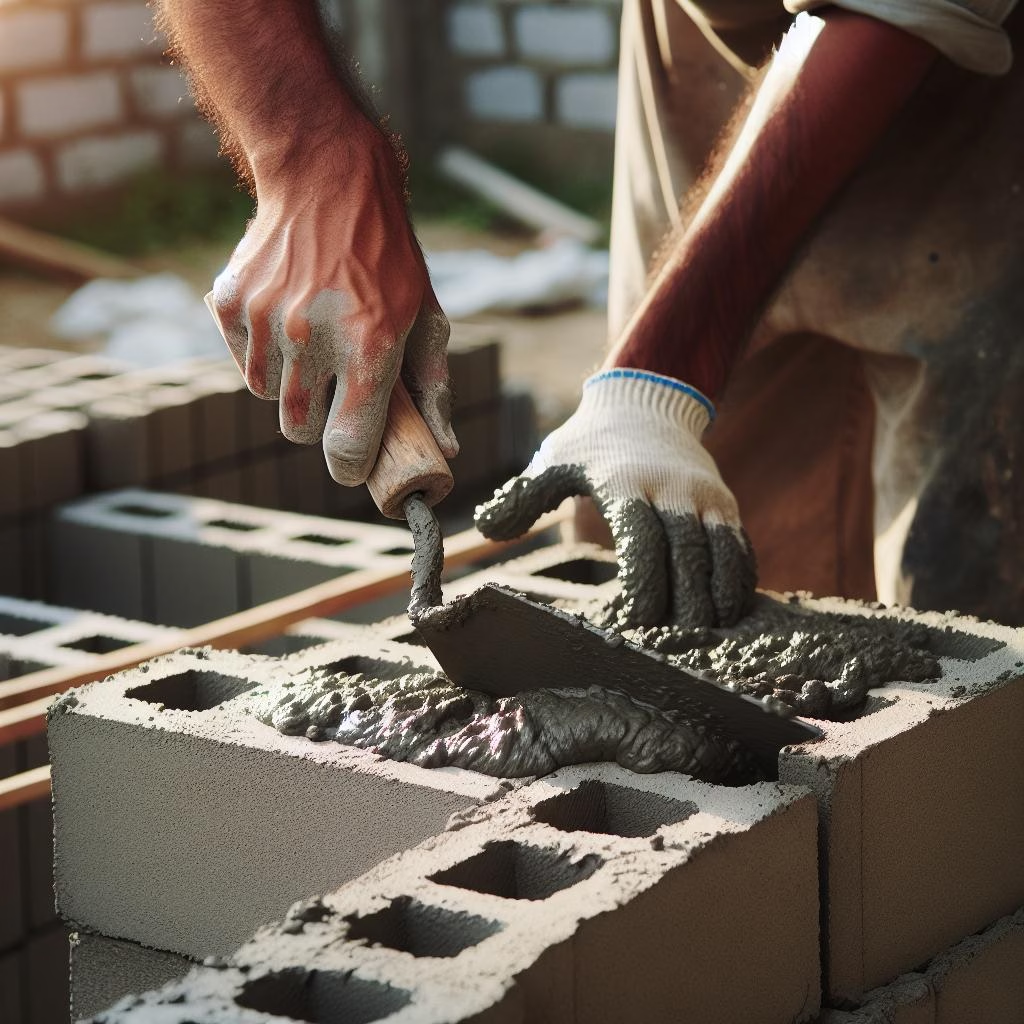
When you’re diving into the world of construction and home projects, understanding the role of block fill in masonry walls is key. Fundamentally, block fill involves materials like cement, brick, and gravel that are used to fill hollow spaces in masonry blocks. This not only boosts structural integrity but also enhances thermal insulation, making your space stronger and more energy-efficient. For both professionals and keen DIY enthusiasts, estimating block fill is crucial to ensure you have just the right amount of materials, minimizing waste while maximizing efficiency. Whether you’re erecting a new wall or retrofitting an old one, knowing your block fill can make all the difference in achieving a robust and durable design.
Understanding Block Fill Importance & Estimation
When it comes to building sturdy walls, block fill is your secret weapon. Often used in home construction, landscaping, and renovation projects, block fill refers to the materials that fill in the spaces of masonry walls, such as concrete blocks. This filling gives the walls extra durability and strength, which is crucial for the long-lasting stability of your constructions. Not only does it enhance the strength, but it also offers aesthetic benefits as it can create smoother finishes and improved visual appeal. Despite these advantages, block fill can pose some challenges, too. It can be costly, especially in large-scale projects, and the extra weight might make handling a bit trickier during construction. However, when done right, block fill becomes a perfect blend of beauty and brawn for your dream space.How to Estimate Block Fill Needs
Estimation of block fill in masonry walls is crucial as it ensures accurate budgeting, helps avoid material shortages or surpluses, and contributes to project efficiency. By understanding necessary quantities, builders minimize waste and streamline construction processes, ensuring timely project completion and optimal use of resources.Are you wondering how to estimate the amount of block fill needed for your masonry walls? Here’s a simple formula that can lend a hand.
Total Block Fill = (Height of Wall x Length of Wall x Width of Block) ÷ Block Size
Block Fill Estimator
Volume = 0 cm × 0 cm × 0 cm
Volume: 0.00 cm³
Key Insights on Block Fill Importance and Estimation
When it comes to masonry walls, block fill plays a crucial role, especially due to its ability to improve the wall’s functionality and resilience. Here are some major factors to consider:1. Durability: A well-calculated block fill can significantly strengthen masonry walls, enhancing their longevity. Overestimation can lead to unnecessary costs, while underestimation might result in weakened structures.
2. Cost: Efficient estimation ensures cost-effectiveness by preventing excess material use, thereby reducing waste and expenses.
3. Sustainability: Consider eco-friendly materials for block fill to support green building initiatives, potentially reducing the project’s carbon footprint.
4. Safety: Properly filled masonry walls are more structurally stable and resistant to weather impacts, enhancing overall safety. Miscalculations can lead to hazardous conditions.
5. Thermal Performance: Block fill enhances insulation, aiding in temperature regulation, which can significantly cut down energy bills.
To avoid pitfalls, accurately assess the wall dimensions and the fill material’s density. It’s advisable to consult with professionals who understand the intricacies of masonry work. Also, invest in quality materials that match your design and environmental goals. Assessing these factors ensures a robust, efficient, and sustainable masonry structure.
Practical Applications of Block Fill Calculations in Real-Life
Picture this: You’re setting off on a grand adventure of construction or renovation, and you’re about to dive into the world where masonry walls reign supreme. Knowing why block fill matters and how to gauge it can make this journey smoother than ever. So, let’s explore some real-world settings where this knowledge is like golden bricks:- During a home renovation, correctly estimating block fill ensures walls are sturdy, reducing future repairs.
- In commercial construction, block fill optimizes thermal efficiency, keeping energy costs lower for business owners.
- When landscaping, filled blocks provide strong retaining walls, enhancing the overall aesthetic and preventing erosion.
- In DIY projects, accurate calculation of block fill ensures amateur builders achieve professional standards.
- Planning a new school building where safety is paramount; using block fill reduces the risk of structural failures.
- Rehabilitating heritage buildings demands specific attention to block fill to preserve the charm while ensuring structural integrity.
- Establishing sound barriers with filled blocks minimizes noise pollution in residential neighborhoods, enhancing living conditions.
Using quality sealants for waterproofing and joint protection not only boosts safety by preventing structural damage but also can save costs by reducing the need for frequent repairs. This ensures durability and peace of mind.
Conclusion
When it comes to building with reinforced concrete, the secret to success lies in meticulous planning and accurate calculations. By evaluating the amount of rebar needed precisely, you ensure durability and structural integrity, contributing to a smoother project.Worried about managing it all? Fear not! With the right tools and expertise, you can transform complexities into straightforward solutions. Don’t let uncertainty weigh you down—embrace forward-thinking design and start your project on the right foot.
Discover how Earthsarc can guide you through this process and help turn your dream spaces into reality today!