
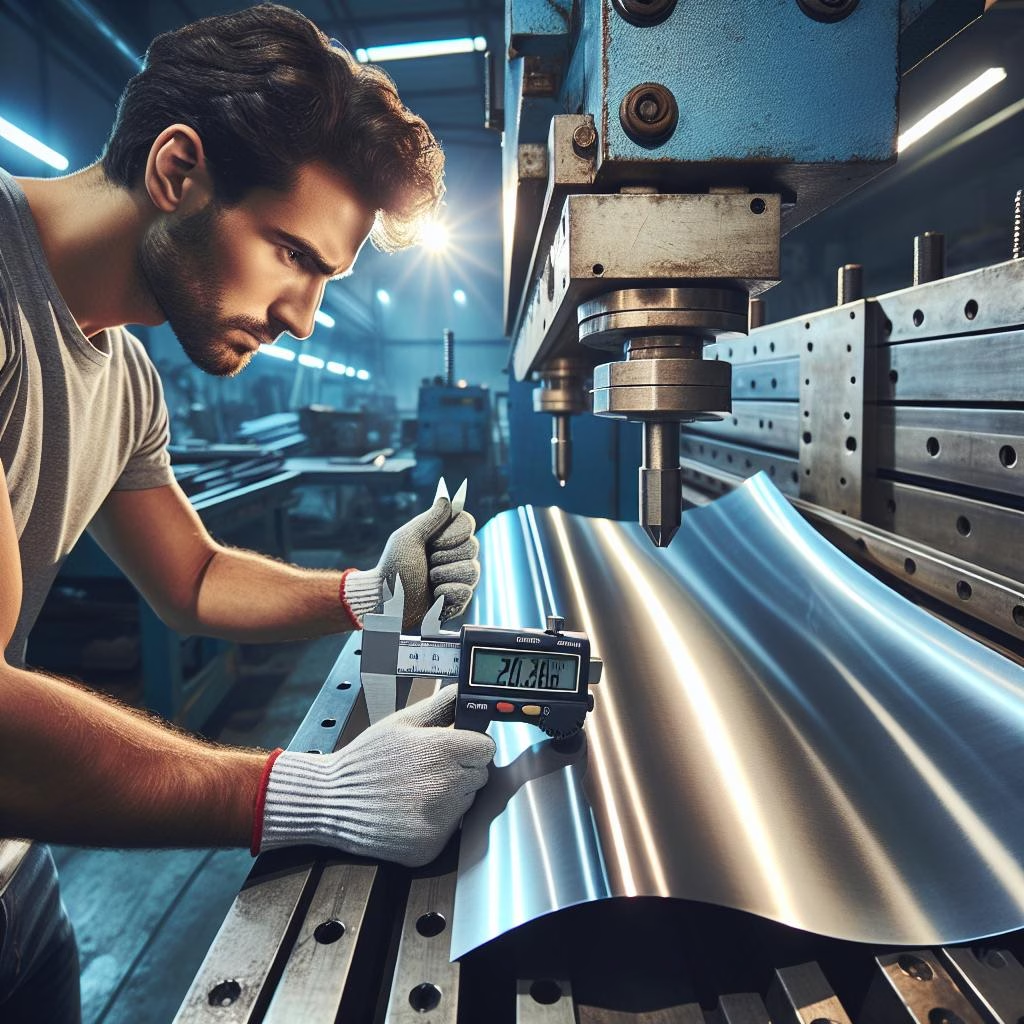
Sheet metal bending might not be the first topic on your list when thinking about home projects, but understanding the K-Factor is crucial for both professionals and homeowners alike. At its core, the K-Factor is a measure that accounts for how much metal stretches when it’s bent, vital for precision in construction. Whether you’re crafting a sleek kitchen appliance or a trendy metal staircase, the K-Factor ensures that your bends are precise, minimizing material waste and saving costs. Professionals adore it for its precision and functionality, while savvy homeowners appreciate the appeal and durability that perfectly bent metal features bring to modern home designs. Embrace the K-Factor, and watch your designs come to life with finesse and efficiency!
Decoding the K-Factor in Bending
Understanding the K-Factor in sheet metal bending can seem like a head-scratcher, but it’s simpler than it sounds. Basically, the K-Factor is a nifty little ratio that helps designers and engineers figure out how much a metal bends without cracking. It’s all about balancing the inner and outer surfaces of the bend. Sneaky, right? It’s often used in home construction, landscaping projects, and even in renovations because, well, who doesn’t want a material that combines durability, aesthetics, and strength? The advantage of using the K-Factor is that it ensures the metal stays tough yet classy, perfect for stylish, long-lasting designs. However, there are challenges—it can sometimes be expensive and heavy, not to mention a bit tricky to handle if you’re not expecting that extra heft. Despite these hurdles, its benefits make it a must-consider for many projects.How to Estimate K-Factor Needs?
Accurate estimation is crucial because it directly impacts the precision and efficiency of bending sheet metal. Understanding the K-Factor allows designers and engineers to predict the behavior of the metal, ensuring seam quality and dimensional accuracy while minimizing material waste, thus optimizing the overall production process.When diving into the art of sheet metal bending, understanding the K-Factor is crucial. The K-Factor is a ratio representing the location of the neutral axis relative to the material’s thickness during bending. This influences how the sheet metal stretches and compresses. Here’s a simple formula to calculate the K-Factor:
K-Factor = (t / T)K-Factor Calculator
Bend Allowance = 0 mm/degree
Bend Allowance: 0.00 mm
“Essential Insights on the K-Factor in Bending”
Working with sheet metal can be an art, but it demands precision, especially when it involves the K-Factor. Here’s a handy list of key factors to consider:1. Material Thickness: Understanding thickness helps ensure bends don’t result in cracks.
2. Material Type: Different metals bend differently. Choose wisely to maintain sheet integrity.
3. Bend Radius: The bend radius affects the metal’s structural integrity and appearance.
4. Tooling Selection: The tools used can make or break—literally—your project’s success.
5. Bend Direction: Consider the grain direction of the metal to reduce bend-related defects.
6. Temperature Variations: Temperature can affect how the material behaves under pressure.
7. Strain Hardening: Over-bending can lead to strain hardening, making future adjustments tricky.
Problems arise when these factors are underestimated. Cracks, weak spots, or inaccurate dimensions can compromise safety and increase costs. To avoid these pitfalls, always double-check calculations, use the right tools, and maintain a checklist of these factors during planning and execution. A practical tip is to prototype with a sample piece of sheet metal before executing the entire project. You’ll appreciate the time saved in the long run! Keep a close eye on tools and materials, because a small oversight can lead to bigger issues down the road. Happy bending!
Applying K-Factor for Sheet Metal Efficiency
Understanding the K-Factor in sheet metal bending is crucial in various scenarios for precise creations. Let’s explore where this concept really makes a difference:- Home Renovation: Crafting custom metal countertops, which must fit flawlessly into the kitchen layout.
- Commercial Construction: Developing office partitions, where precise bends ensure soundproof and sturdy walls.
- Landscaping: Designing garden edging with metal that curves beautifully without cracking the material.
- DIY Projects: Creating bespoke furniture pieces that need smooth and even bends for aesthetic finishes.
- Industrial Equipment: Building machinery parts that demand precision for safety and functionality.
- Architectural Installations: Designing building facades that feature intricate metalwork requiring exact bends.
- Artistic Sculptures: Forming metal artworks with flowing curves, necessitating precise bending calculations.
Using quality sealants for waterproofing and joint protection not only boosts safety by preventing structural damage but also can save costs by reducing the need for frequent repairs. This ensures durability and peace of mind.
Final Thoughts on K-Factor
When it comes to building with reinforced concrete, the secret to success lies in meticulous planning and accurate calculations. By evaluating the amount of rebar needed precisely, you ensure durability and structural integrity, contributing to a smoother project.Worried about managing it all? Fear not! With the right tools and expertise, you can transform complexities into straightforward solutions. Don’t let uncertainty weigh you down—embrace forward-thinking design and start your project on the right foot.
Discover how Earthsarc can guide you through this process and help turn your dream spaces into reality today!