
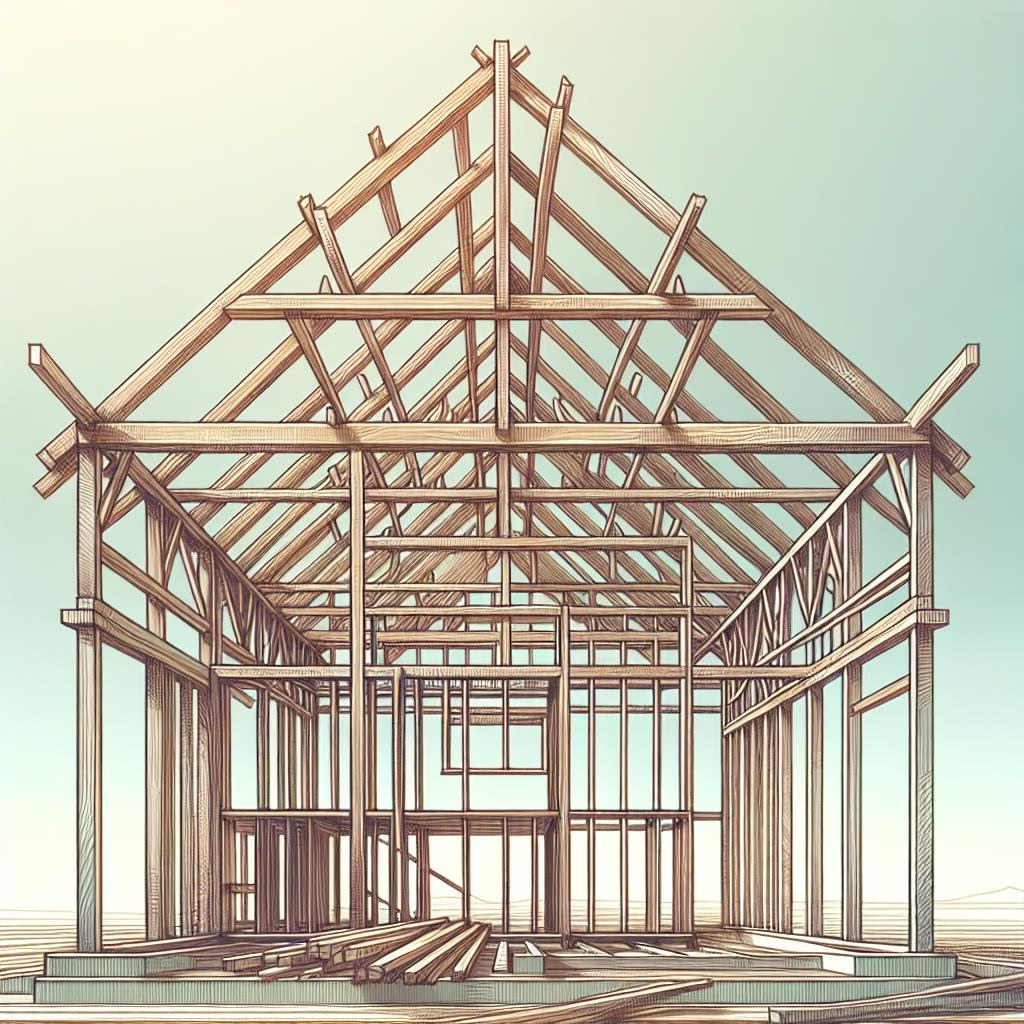
When diving into the world of construction or that all-important home project, “A Beginner’s Guide to Roof Truss Design and Planning” is your essential blueprint. Simply put, a roof truss is a framework—made from materials like wood, steel, or engineered products—that supports your roof. It’s a key player in giving structure and stability to buildings. Why does this matter? Well, a thoughtfully designed truss can lead to safer, more sustainable homes that stand the test of time. Both professionals and DIY homeowners lean on this guide to craft roofs that are as functional as they are beautiful. It demystifies the process, ensuring your dream design can literally reach for the skies!
Understanding Roof Truss Design Basics
Welcome to the world of roof truss design—a game changer in the construction scene! A roof truss is essentially a framework of triangular units made from wood or metal. They’re crucial in home construction, landscaping, and renovation projects because they transfer weight from the roof to the building’s load-bearing walls. Imagine building something super strong and stylish, that’s a roof truss for you! They offer advantages such as enhanced durability, stylish looks, and an excellent strength-to-weight ratio. However, they do come with a few hurdles. While they are fantastic for quality and weather resistance, their upfront cost can be a bit steep, and handling them requires specialized skills due to their weight. But don’t worry—the investment is worth the years of quality support they provide! After all, balanced construction leads to happy homes.How to Estimate Roof Truss Needs?
Estimation in roof truss design is crucial because it helps determine the precise amount of materials needed, which in turn influences cost, structural integrity, and project timeline. Accurate estimation ensures that the design is both economical and effective, resulting in a roof that is safe, sustainable, and visually appealing.For all you budding architects and seasoned enthusiasts, calculating the load of a roof truss is simpler than one would imagine with this formula. Here’s the calculation for uniformly distributed loads:
Total Load (kN or lbs) = (Area of Roof (m² or ft²) x Load per Unit Area (kN/m² or lbs/ft²)) + Additional Loads (kN or lbs)Roof Truss Span Calculator
Total Load = 0m * 0m * 0 kg/m²
Total Truss Load: 0.00 kg
Essentials of Roof Truss Design and Planning
Designing and planning roof trusses can be quite the puzzle, but knowing the major factors at play can transform complex decisions into more navigable terrain. Here are five major considerations:1. Durability: Ensure that the materials chosen withstand climatic challenges and remain resilient over the structure’s lifespan. Misestimation here can lead to costly repairs and structural failures.
2. Cost: Balancing affordability with quality is crucial. Overlooking total expenditures might result in budget shortfalls or compromised quality.
3. Sustainability: Opt for eco-friendly materials and designs that reduce carbon footprints. When underestimated, environmental impacts can increase, contrasting with modern eco-conscious philosophies.
4. Safety: Certified designs and material selections enhance safety. Lapses in this area could lead to accidents or require adherence to unexpected compliance measures.
5. Load-Bearing Capacity: The design must support anticipated weight loads through all seasons; inaccurate calculations could severely impair structural integrity.
Now, for a few practical tips: Always consult with structural engineers, use simulation software to test various stress factors, and explore emerging materials for innovative, sustainable solutions. It’s these details that enable lasting security and aesthetic prowess in roof truss creations.
Practical Insights: Roof Truss Design in Action
- Home renovation projects where roof truss specifications need updating to improve space functionality and energy efficiency.
- Commercial construction where the roof truss system impacts large, open spaces such as warehouses or retail stores.
- Landscaping developments that include garden features requiring unique roof truss designs for outdoor structures.
- DIY home improvement projects where creative storage solutions or loft conversions depend on properly planned trusses.
- New housing developments where custom roof trusses add aesthetic value to subdivisions.
- Community centers or public spaces that need expansive roofs with minimal interior support structures.
Meanwhile, architects can dream big, experimenting with innovative forms and ensuring structural integrity without intense detailed design from scratch.
On the other hand, homeowners enjoy cost-effective solutions and the excitement of creating bigger open spaces or unique architectural styles.
All in all, this knowledge supports everyone in achieving secure, efficient, and beautiful builds.
Using quality sealants for waterproofing and joint protection not only boosts safety by preventing structural damage but also can save costs by reducing the need for frequent repairs. This ensures durability and peace of mind.
Final Thoughts on Roof Design
When it comes to building with reinforced concrete, the secret to success lies in meticulous planning and accurate calculations. By evaluating the amount of rebar needed precisely, you ensure durability and structural integrity, contributing to a smoother project.Worried about managing it all? Fear not! With the right tools and expertise, you can transform complexities into straightforward solutions. Don’t let uncertainty weigh you down—embrace forward-thinking design and start your project on the right foot.
Discover how Earthsarc can guide you through this process and help turn your dream spaces into reality today!