
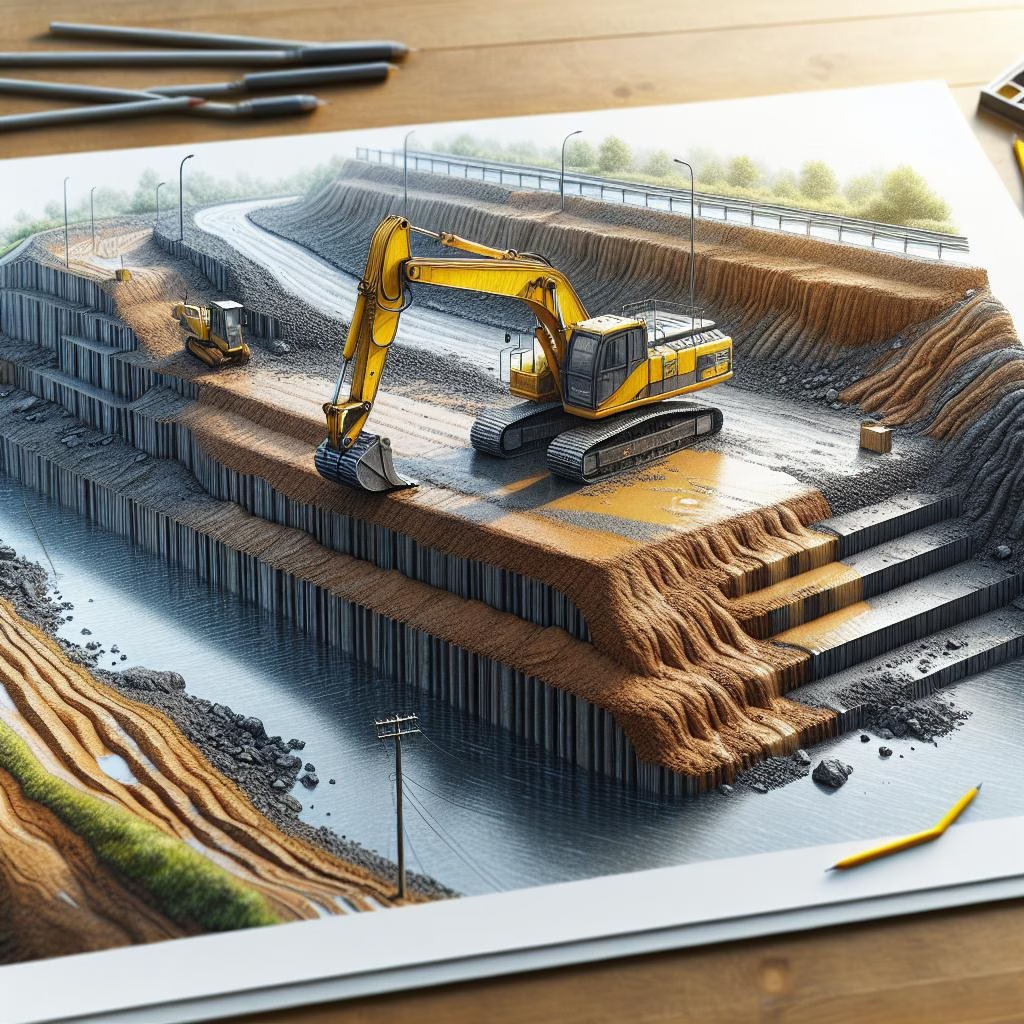
Ever wondered why some homes stand proud and strong, while others falter over time? The secret often lies beneath our feet—elevation grade. Simply put, elevation grade involves the slope or level of the land upon which a building stands. It may sound technical, but it’s as essential as choosing the right materials like cement or brick for construction. A proper elevation grade ensures effective drainage, preventing water buildup that can erode foundations. Professionals and homeowners alike harness this element in construction and renovation projects, safeguarding the structures’ longevity and stability. In essence, understanding and utilizing elevation grades effectively can spell the difference between a dream home that lasts and one that struggles with foundational woes.
Understanding Elevation Grade: Effects on Stability
When we talk about the “How Elevation Grade Affects Drainage and Foundation Stability,” we’re diving into the backbone of any solid structure or garden design. At its core, elevation grade refers to the slope or gradient of the land your home sits on. Now, why does this matter? Well, in home construction, landscaping, or even when renovating, managing the elevation grade expertly is key to ensuring water drains away properly. Proper drainage can prevent nasty water damage and maintain that sturdy base we all love—a stable foundation. Besides, with good elevation planning, you can enjoy a scenic landscape with more visually appealing layers. However, every rose has its thorns! While achieving perfect grades installs durability and strength, the challenge is they can sometimes be costly. Plus, mastering the art of handling and planning the land takes skill and finesse.
How to Assess Elevation’s Impact?
Estimation is crucial because it helps ensure that the elevation grade is suitable for proper drainage and foundation stability. Without accurate assessments, structures risk water accumulation and erosion, potentially leading to structural damage and costly repairs. By planning precisely, you safeguard longevity and functionality in your designs.
StableHeight = (Elevation Change / Distance) * 100
Elevation Grade Calculator
Rise = 0m * (0 / 100)
Rise: 0.00 m
Understanding Elevation’s Impact on Your Home’s Stability
When dealing with “How Elevation Grade Affects Drainage and Foundation Stability,” it’s essential to keep these key factors in mind to avoid serious construction pitfalls. 1. Durability: A properly graded foundation ensures long-term stability and minimizes erosion risks. Without it, you may end up with cracks or structural weakness.
2. Cost: Misjudged elevation can lead to costly repairs, as correcting drainage issues or foundation faults isn’t cheap.
3. Sustainability: Correct grading helps in managing water flow, which is crucial for reducing environmental impact and preventing landscaping damage.
4. Safety: Incorrect grading could lead to water pooling, increasing the risk of slips and foundational damage.
5. Weather Adaptability: Seasonally fluctuating weather might test your grading plan, necessitating adjustments for sustained results.
Here are practical tips to finesse your approach:
– Implement professional topographical surveys for accurate elevation assessments.
– Employ high-quality compact materials in grading to enhance stability.
– Regularly monitor and maintain the drainage system to adapt to any changes in the landscape.
By factoring in these elements, you’ll not only save money but also ensure your structures are built to last.
Harnessing Elevation Grade for Practical Building Success
Understanding how elevation grade affects drainage and foundation stability is crucial across various real-world scenarios. Here’s a closer look at why:- Renovating an older home: During renovations, the elevation grade can impact water flow, potentially causing basement flooding if not addressed appropriately.
- Building a new office block: The stability of a commercial building’s foundation depends on proper grading to prevent structural issues caused by water pooling.
- Designing a garden: Proper elevation ensures water drains away from plant roots, promoting healthy growth and preventing root rot.
- Creating a public park: Safe water drainage is vital to keep walking paths accessible and prevent erosion.
- Engaging in DIY projects: Installing paving stones on a sloped driveway requires an awareness of drainage to avoid water damage.
- Developing housing complexes: Understanding elevation helps design stable roadways and prevents water management issues.
Using quality sealants for waterproofing and joint protection not only boosts safety by preventing structural damage but also can save costs by reducing the need for frequent repairs. This ensures durability and peace of mind.
Conclusion: Elevation Grade’s Impact
When it comes to building with reinforced concrete, the secret to success lies in meticulous planning and accurate calculations. By evaluating the amount of rebar needed precisely, you ensure durability and structural integrity, contributing to a smoother project.Worried about managing it all? Fear not! With the right tools and expertise, you can transform complexities into straightforward solutions. Don’t let uncertainty weigh you down—embrace forward-thinking design and start your project on the right foot.
Discover how Earthsarc can guide you through this process and help turn your dream spaces into reality today!